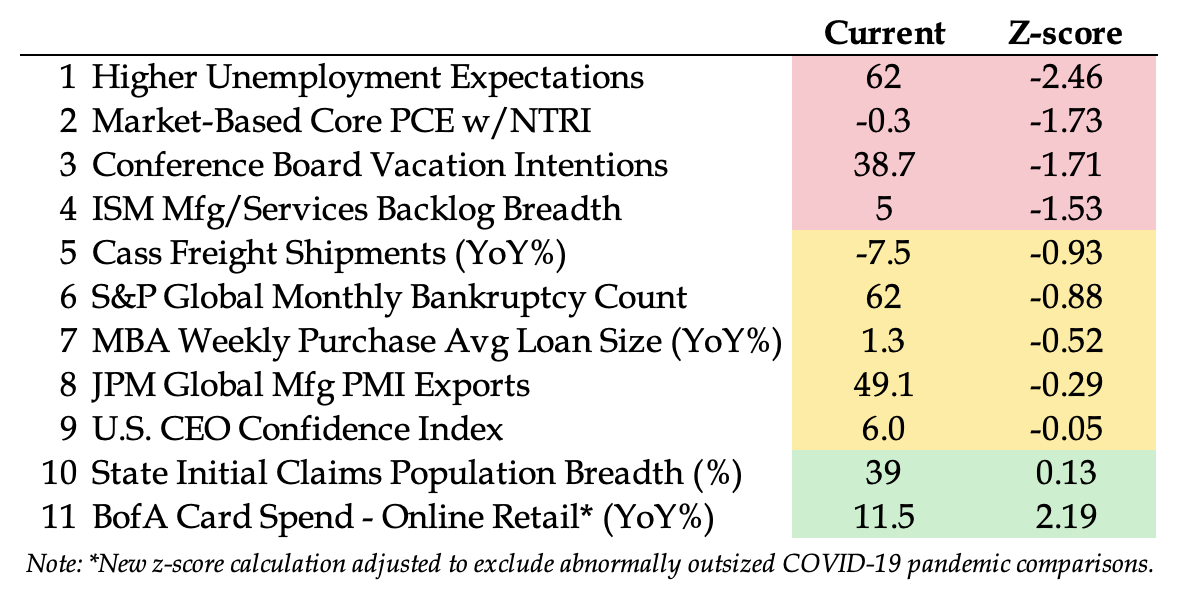
QI PRO HOLY GRAIL DASHBOARD

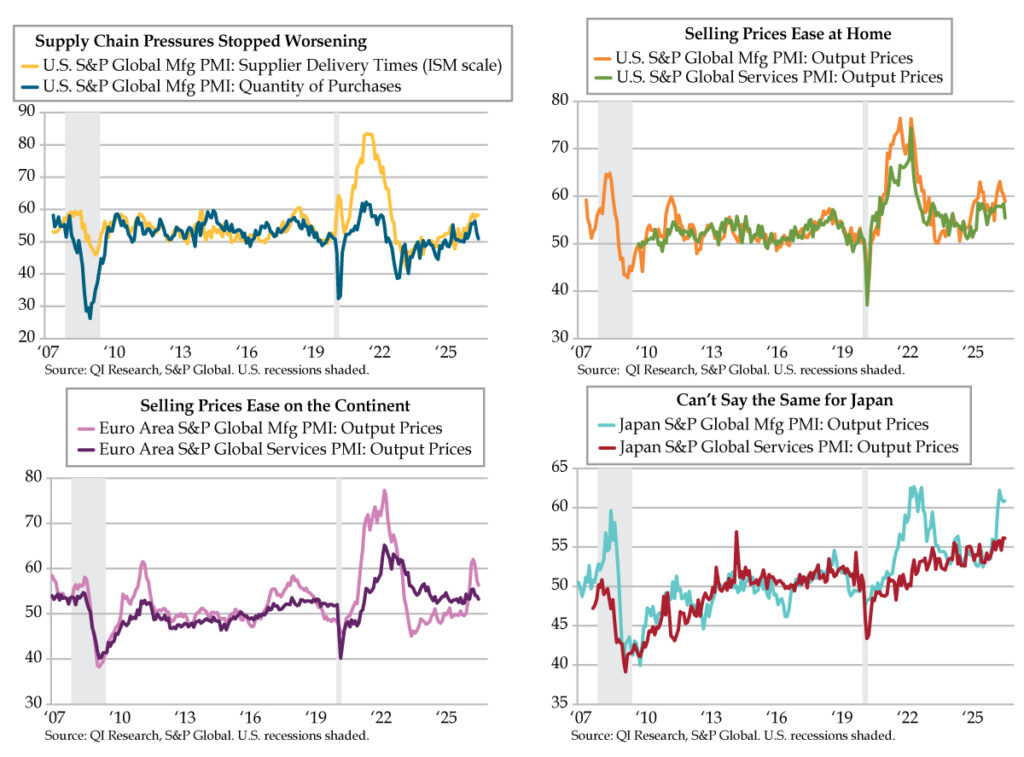
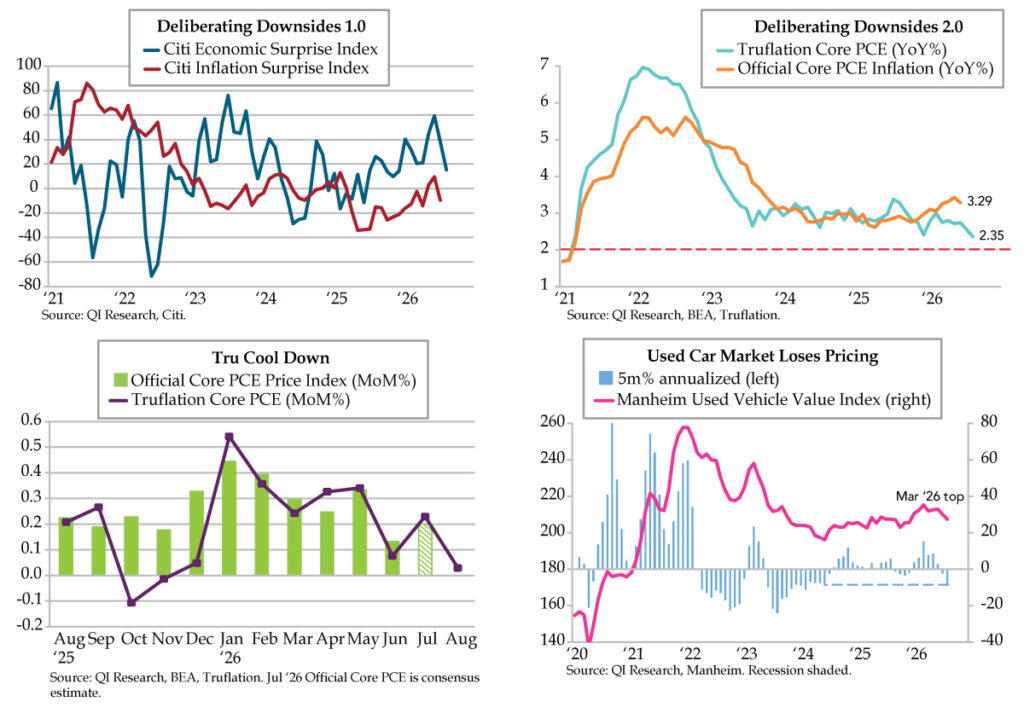
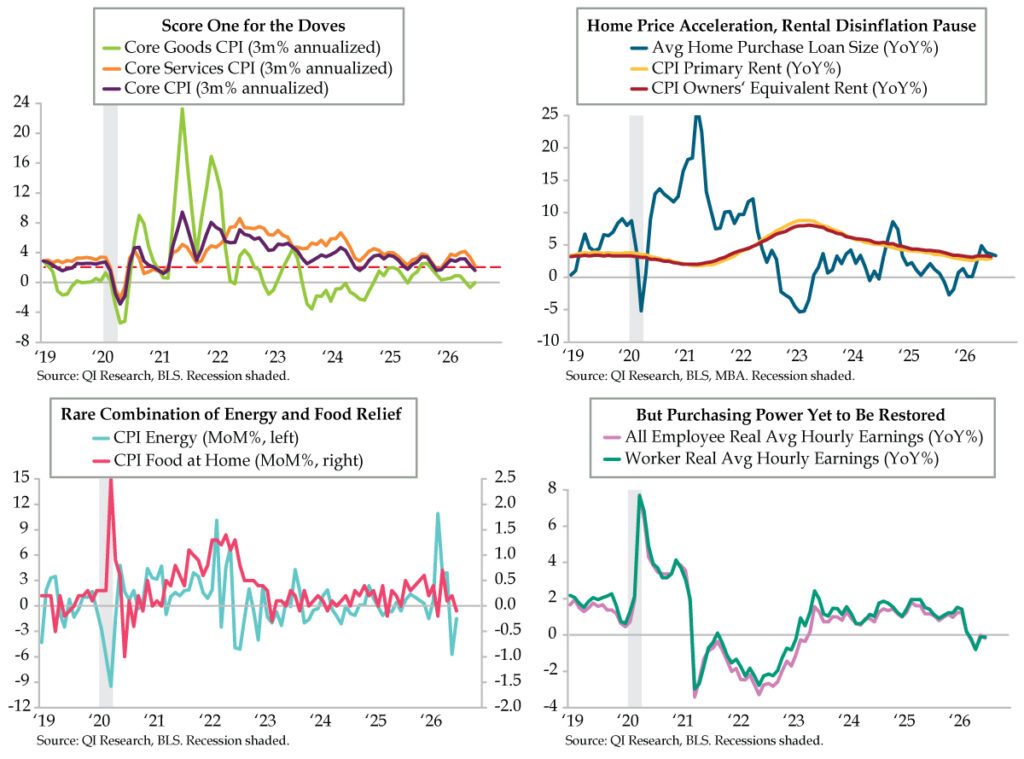
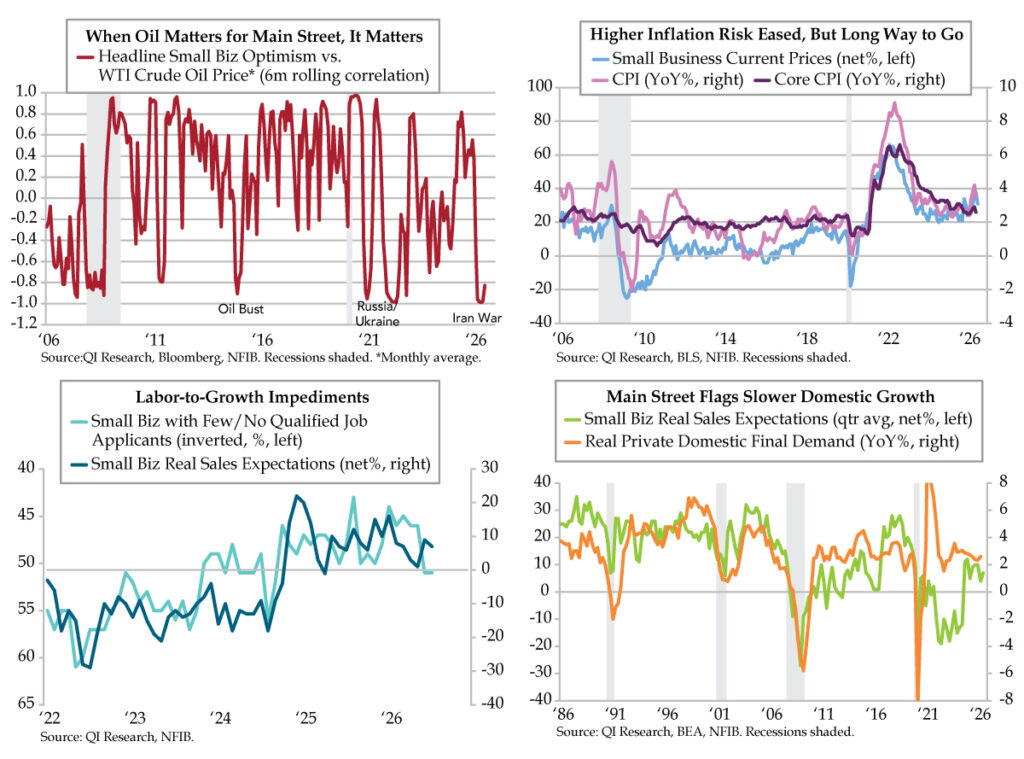
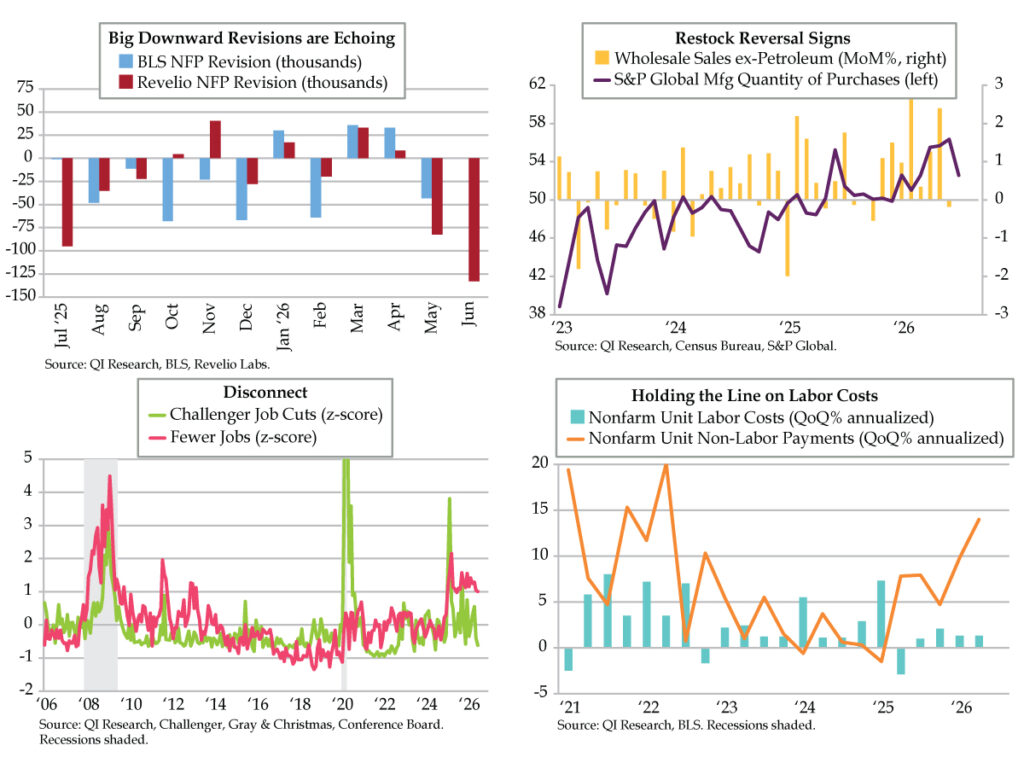
QUICK QUILL — G7 nations’ headline inflation rolled over in June, but the ramp-up in hostilities in the Middle East suggesting the relief could be temporary. Core inflation, meanwhile, exhibited a lack of pass-through in the U.S., Canada and Germany. With rising oil pricing hitting consumer and business purchasing power anew, underlying inflation should remain under pressure. Because the ECB targets headline inflation, unlike operational core measures for the Fed and BoC, rate hike expectations are greater there. The Continent being a net oil importer renders its service sector more vulnerable to underperformance relative to its manufacturers, placing this development higher on our watchlist.

TAKEAWAYS

  1. Relative to February, U.S. CPI ex-food and energy was only 0.1 ppts higher in June, at 2.6%, while Germany’s 2.5% was flat and Canada’s 1.8% was down two-tenths; in fact, BoC CPI-median and CPI-trim both fell below the 2% inflation target for the first time in six years
  2. Germany’s PPI fell 0.3% MoM in June, the first decline since February, while durable goods PPI was unchanged; German Mfg Backlogs retreating from a four-year high and Quantity of Purchases being in the red also suggest the next PPI report shows a small, energy-driven gain
  3. Brent crude oil has ticked up from its $71.57 low on July 1 to around $90 as of July 20; the ECB targets headline inflation rather than core, and given its status as a net oil importer, traders are pricing two ECB hikes this year vs. one for the Fed and less than one for the BoC

LONG MACRO

Recession probability to rise into 2025’s second half as private demand underperforms. The tariff shock should generate greater risks for a downshift in business investment and a more challenging environment for consumer cyclicals vis-à-vis consumer non-branded noncyclicals.

Manic shifts in U.S. politics harken first a deflationary gully to cross followed by the threat of impeachment and ultimately, a fourth change in administrations in as many U.S. presidential elections, a first in sequential terms since the precipice of the U.S. Civil War. The subsequent pendulum swing will manifest as Universal Basic Income/Modern Monetary Theory, and with it, the secular rise in inflation being prematurely predicted today by those positioned to profit from being short Treasuries.

Saturday Intelligence Briefing — 7.18.26

“You Deepsunk my Battleship! AGAIN!!” Gray-haired veteran traders heard this in their heads Friday alongside the sting of being fooled twice. The thing is, few were surprised about Moonshot, which needs no description. On Thursday, Bloomberg reminded the Street about DeepSeek’s adoption using simple math in the heart of San Francisco: “Lindy AI had been using Anthropic's Claude Sonnet, but switched to DeepSeek after six weeks of evaluation. ‘We're now paying about 10% of what we used to pay,’ said Flo Crivello, the company’s CEO, adding the startup is saving millions of dollars annually — more than the total cost of its entire 27-person workforce.”

The disconnect between America’s AI reality -- that of sunk costs on an unfathomable and unprecedented scale -- and investors’ sanguine view of the economy’s prospects is mindboggling. We know that the illusion of AI has been levitating everything from infrastructure and construction to industrial production and GDP in the U.S. economy. And yet, Bank of America’s July Global Fund Manager Survey (FMS) revealed a record 54% surveyed were in the ‘no landing’ camp for the global economy in the next 12 months (yellow bars). This was decisively higher than the 39% expecting a ‘soft landing’ (green bars) and the exiled 2% record low who foresee a ‘hard landing’ (red bars).

Continue Reading

TACTICAL

RATES:

Short-end and Belly best opportunities for total return. Rally keys off weaker macro. Challenged private demand, higher unemployment and lower core inflation raise Fed rate cut probabilities.

Long-end holds at elevated levels with de facto caps at 4.5% for the 10-year & 5% for the long bond with the term premium supported by fiscal malfeasance exacerbated by falling sovereign revenues and despite diminishing stimulus to the U.S. consumer.

Curve view – Bull steepener in 2025’s second half.


USD:

A sidelined Fed contrasting with most global central banks easing catalyzed a selloff in the greenback. A Fed forced to play catchup could easily thin the massively crowded trade, especially as global trade weakness impairs an open global economy vs. its closed U.S. counterpart.


CREDIT:

•  Underweight HY, overweight strong cash-flow IG

•  Lower-rated buckets at risk of dispersion with Fed Higher for Longer

•  Jobless claims deterioration makes a cautious Street rethink already-wider-spreads 2025 expectations, i.e., up default estimates as bankruptcy cycle speeds up and size

•  Fitch’s acknowledgement of cyclical consumer sector “deteriorating” fits this view


EQUITIES:

OW     Utilities
OW     Fossil Fuel Energy
OW     Senior Living

UW     Consumer Staples
UW     Consumer Discretionary
UW     Large & Midsize Banks


OTHER ASSETS:

•  USD view supports UW commodities & EM

•  Oil is a different story with geopolitical risk ramping (Israel v Iran)

•  Long MOVE to capitalize on runaway lending to Nondepository Financial Institutions triggering a credit event